
Learn how Bitcoin ETFs work in this comprehensive guide. Discover the meaning of Bitcoin ETFs, how they track Bitcoin’s price, their benefits and risks, and whether they fit your investment strategy. Perfect for beginners and long-term investors.
As Bitcoin continues to evolve from a niche digital currency into a mainstream financial asset, investors are searching for easier, regulated, and more accessible ways to gain exposure. This is where Bitcoin ETFs come in.
These exchange-traded funds allow investors to benefit from Bitcoin price movements without needing a crypto wallet, private keys, or interaction with crypto exchanges.
In this guide, you’ll learn what Bitcoin ETFs are, how Bitcoin ETFs work, their benefits, risks, and whether they fit into your investment strategy. If you want Bitcoin ETF meaning and Bitcoin ETF explained in clear, simple terms, you’re in the right place.
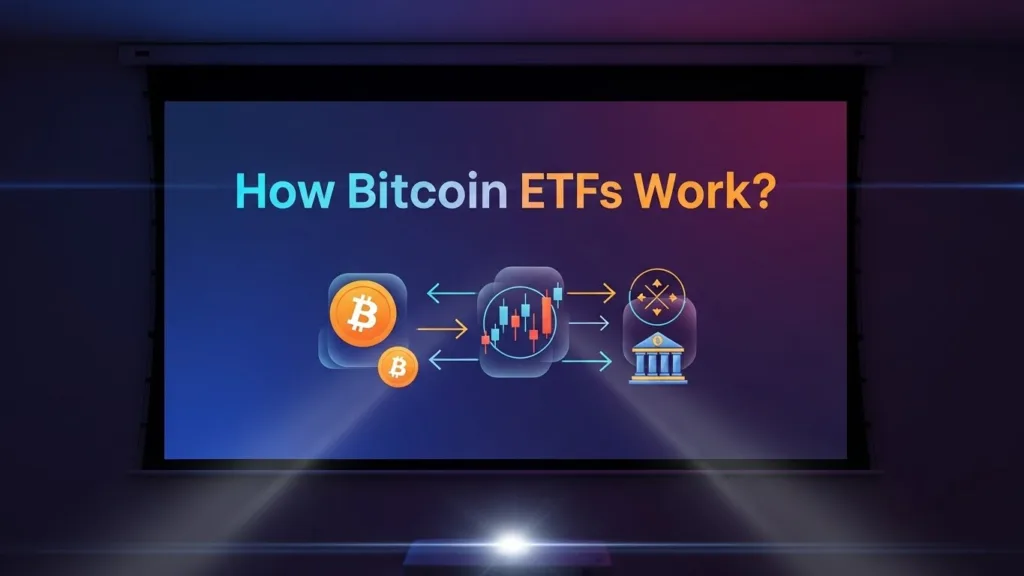
What Is a Bitcoin ETF? (Bitcoin ETF Meaning Explained)
A Bitcoin ETF (Exchange-Traded Fund) is a publicly traded investment fund that tracks the price of Bitcoin. Instead of purchasing Bitcoin directly, you buy shares of the ETF through a brokerage account—just like buying stocks or traditional ETFs.
Depending on the type of Bitcoin ETF, the fund may:
- Hold actual Bitcoin (Spot Bitcoin ETF)
- Hold Bitcoin futures contracts (Futures Bitcoin ETF)
This structure gives you Bitcoin exposure without personally storing digital assets. It combines cryptocurrency performance with traditional stock market convenience.
If you want to explore available spot ETFs, check out our list of spot Bitcoin ETFs.
Why Bitcoin ETFs Matter for Investors
Bitcoin ETFs solve many of the obstacles that prevent average investors from entering the crypto market:
1. No need to manage wallets or private keys
Crypto self-custody requires a high level of responsibility. Bitcoin ETFs eliminate this barrier.
2. Regulated investment vehicle
Bitcoin ETFs trade on major U.S. exchanges like NASDAQ and NYSE. This gives investors stronger legal protection compared to offshore crypto platforms.
3. Accessible through any brokerage account
You can buy Bitcoin ETF shares through:
- Vanguard
- Fidelity
- Schwab
- Robinhood
- TD Ameritrade
- eToro
No specialized crypto platform is required.
4. Ideal for retirement accounts
Many investors want crypto exposure inside:
- IRAs
- Roth IRAs
- 401(k)s
Bitcoin ETFs make this possible.
Types of Bitcoin ETFs: Spot vs. Futures
There are two primary categories of Bitcoin ETFs:
1. Spot Bitcoin ETFs
These ETFs hold real Bitcoin in secure custody. When the price of Bitcoin rises, the ETF shares typically rise proportionally.
Spot ETFs are preferred by long-term investors because they closely mirror Bitcoin’s real market price.
2. Futures Bitcoin ETFs
These ETFs invest in Bitcoin futures contracts, not actual Bitcoin. Prices may differ from Bitcoin’s spot price due to factors such as:
- Futures premiums
- Market volatility
- Contract rolling costs
If you’re unsure about the difference between Bitcoin ETFs, this comparison will help: difference between Bitcoin ETFs.
How Bitcoin ETFs Work: A Step-by-Step Explanation
Now let’s break down how Bitcoin ETFs work operationally so you understand what happens “behind the scenes.”
Step 1: ETF Issuer Creates the Fund
A financial company—such as BlackRock, Fidelity, VanEck, or Bitwise—creates an ETF with the goal of tracking Bitcoin’s price.
The issuer files with regulatory authorities (e.g., the SEC) to receive approval.
Step 2: ETF Buys Assets (Bitcoin or Futures)
Depending on the type of ETF:
- Spot ETFs buy actual Bitcoin and store it with an institutional custodian (Coinbase Custody is common).
- Futures ETFs buy CME-regulated Bitcoin futures contracts.
This backing ensures that the ETF’s share value represents underlying exposure to Bitcoin.
Step 3: Shares of the ETF Are Listed on an Exchange
Once approved, ETF shares are listed on stock exchanges such as:
- NYSE Arca
- NASDAQ
- CBOE
Investors can trade these shares like they would any stock.
Step 4: The ETF Tracks Bitcoin’s Price
ETF managers maintain the fund’s structure so that its performance aligns with Bitcoin.
- For spot ETFs: the fund directly mirrors Bitcoin’s price.
- For futures ETFs: the fund reflects futures market performance, which may differ.
Professional asset managers handle everything in the background.
Step 5: Investors Buy or Sell Shares Through Brokers
You don’t need:
- A crypto wallet
- A private key
- A blockchain transaction
Instead, you buy shares via a normal brokerage account.
Your returns depend entirely on how Bitcoin performs.
Spot Bitcoin ETFs vs. Holding Bitcoin Directly
Many investors wonder whether they should hold Bitcoin or buy a Bitcoin ETF. Here’s a comparison:
| Feature | Spot Bitcoin ETFs | Holding Bitcoin Yourself |
|---|---|---|
| Storage | Custodian handles all storage | You manage private keys |
| Security | Institutional-grade | Depends on your knowledge |
| Accessibility | Easy through broker | Requires crypto exchange |
| Fees | ETF expense ratio | Exchange fees + potential custody tools |
| Ownership | Indirect exposure | Direct ownership of Bitcoin |
| Suitable for Retirement Accounts | Yes | Rarely supported |
Key takeaway: ETFs offer regulation and convenience; holding Bitcoin offers full ownership.
Advantages of Bitcoin ETFs
1. Easy for Beginners
You can invest without worrying about blockchain, wallets, or seed phrases.
2. Strong Regulatory Oversight
ETF issuers must follow strict financial compliance standards.
3. Liquidity and Transparency
Shares trade throughout market hours with clear price visibility.
4. Integration With Traditional Investing Tools
Bitcoin ETFs can be:
- Added to portfolio trackers
- Included in asset allocation models
- Used with automated trading tools
5. Tax Efficiency
ETFs may offer tax benefits compared to direct crypto trading—depending on your jurisdiction.
Risks and Limitations of Bitcoin ETFs
Bitcoin ETFs are not risk-free. Consider these factors:
1. Bitcoin Volatility
Bitcoin’s price can fluctuate dramatically, affecting ETF performance.
2. Expense Ratios
ETF fees (0.20%–0.80%) reduce long-term profit slightly.
3. Tracking Error
Futures ETFs may diverge from Bitcoin’s real market price.
4. No Direct Ownership
You cannot withdraw the ETF shares as Bitcoin.
5. Regulatory Uncertainty
Crypto regulations continue to evolve globally.
How Do Bitcoin ETFs Fit Into a Portfolio?
Investors typically use Bitcoin ETFs for:
1. Long-Term Growth
Bitcoin has historically produced high long-term returns (despite volatility).
2. Diversification
Adding Bitcoin to a portfolio may improve overall risk-adjusted performance.
3. Inflation Hedge
Some view Bitcoin as “digital gold.”
4. Retirement Accounts
ETFs make crypto exposure possible in tax-advantaged accounts.
5. Tactical Trading
Traders may use futures-based ETFs for short-term exposure.
Real-World Examples of Bitcoin ETF Adoption
Millions of dollars flow into Bitcoin ETFs daily from:
- Hedge funds
- Financial advisors
- Pension funds
- Retail investors
- Institutional asset managers
According to industry reports, spot Bitcoin ETFs are among the fastest-growing ETFs in U.S. market history.

For deeper learning, the CorporateFinanceInstitute explains Bitcoin ETFs in a financial context suitable for both beginners and advanced investors.
FAQs: Bitcoin ETFs Explained
What is a Bitcoin ETF?
A Bitcoin ETF is a regulated investment fund that tracks the price of Bitcoin. It allows investors to gain crypto exposure without owning or managing Bitcoin directly.
How do Bitcoin ETFs work for beginners?
They work like regular ETFs. Simply buy shares through a brokerage account. The ETF provider manages the Bitcoin or futures contracts behind the scenes, so there’s no need for technical crypto knowledge.
Are Bitcoin ETFs safe?
Bitcoin ETFs offer more regulatory protection than buying crypto on unregulated exchanges. However, Bitcoin price volatility still affects ETF value.
What is the difference between spot and futures Bitcoin ETFs?
Spot ETFs hold actual Bitcoin; futures ETFs hold CME Bitcoin futures contracts. Spot ETFs track Bitcoin more closely, while futures ETFs may experience tracking errors.
Can I include Bitcoin ETFs in my retirement account?
Yes. Many U.S. brokers allow Bitcoin ETF holdings in IRAs and other retirement accounts, making them ideal for long-term investors.
Are Bitcoin ETFs better than buying Bitcoin?
It depends on the investor. ETFs offer convenience and regulation, while direct ownership offers full control but requires technical knowledge.
Final Thoughts: Should You Invest in Bitcoin ETFs?
Bitcoin ETFs represent a major shift in how investors access cryptocurrency. They combine the growth potential of Bitcoin with the simplicity of traditional investing. Whether you’re a beginner entering crypto for the first time or a seasoned investor seeking regulated exposure, Bitcoin ETFs provide a practical way to diversify your portfolio.
However, like all investments, they come with risks. Understanding how Bitcoin ETFs work, the difference between spot and futures structures, and how they fit within your financial goals is essential before investing.
As Bitcoin adoption continues to expand globally, Bitcoin ETFs will likely play a key role in bringing mainstream investors into the world of digital assets.
